

Website performance affects user experience, accessibility and how efficiently a page can be crawled and rendered. A good performance strategy starts with reducing unnecessary resources and delivering the important content as efficiently as possible.
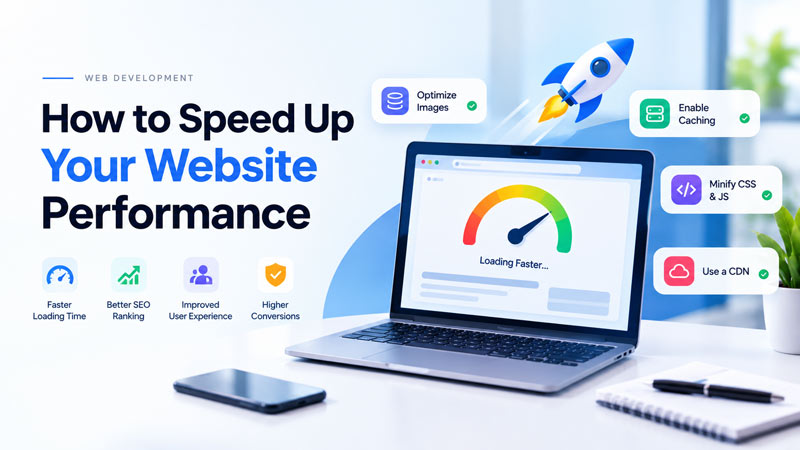
Images are often one of the largest page resources. Using appropriately sized images, modern formats where practical, descriptive alternative text and lazy loading for below-the-fold images can reduce unnecessary browser work.
CSS and JavaScript should also be reviewed for unused code, duplicate libraries and scripts that block important rendering. Combining sensible asset loading with good server-side caching and a clean HTML structure can provide a stronger performance foundation.